

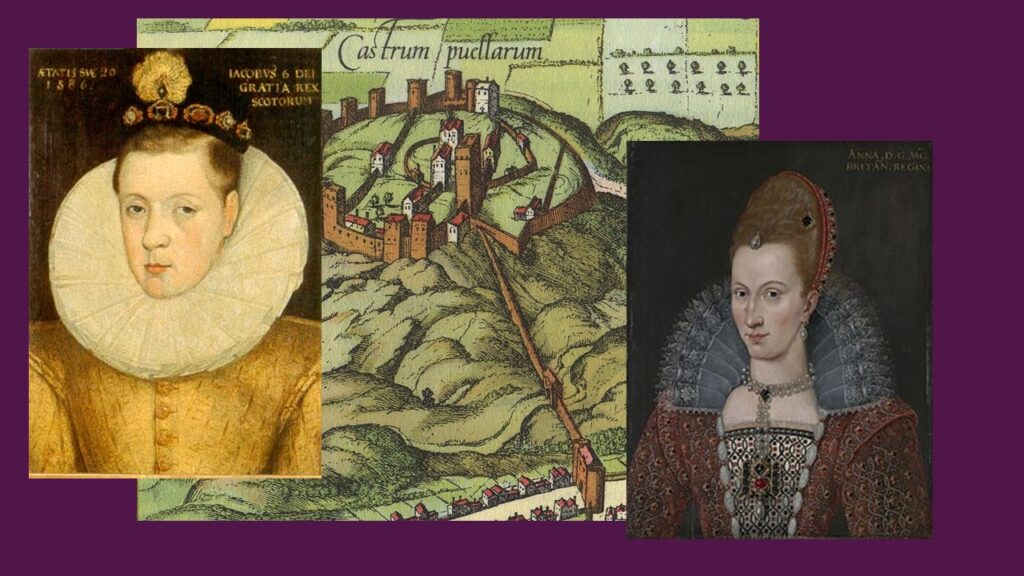
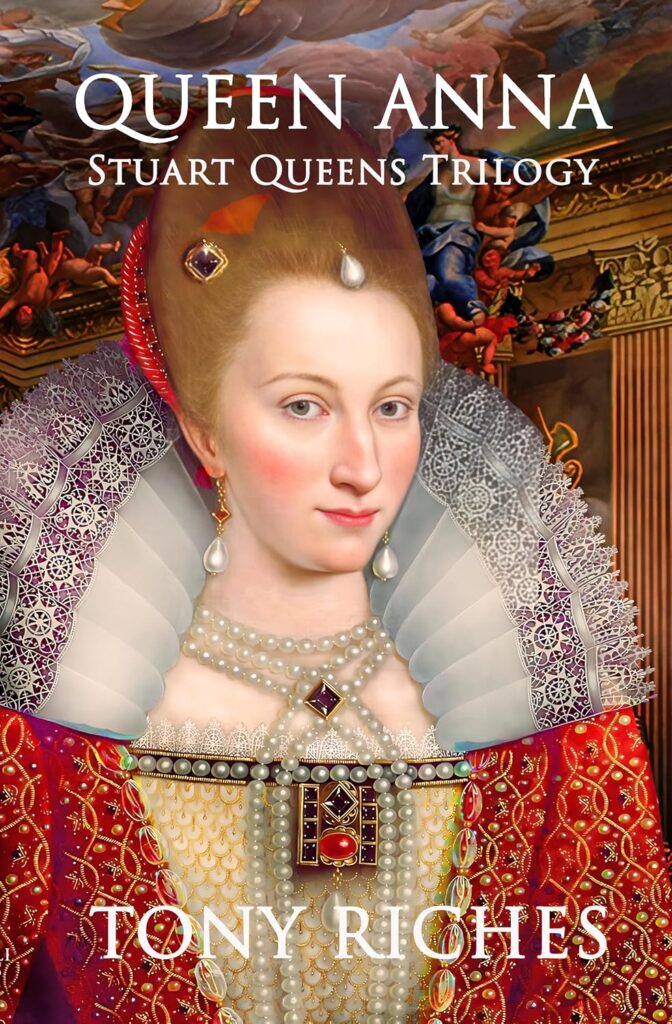
Today, I am delighted to welcome Tony Riches back to my blog, this time to celebrate his recent release, Queen Anna
Anna was born a Danish princess, daughter to the keen amateur chemist Sofia of Mecklenburg and Fredrik II. Her mother was a big fan of Tycho Brahe, not so Anna’s brother, Christian IV, both of whom have featured on this blog before.
Someone who hasn’t been featured is James VI & I. I must admit to never quite liking him, and after reading Tony’s book, I like him even less—a bigoted and superstitious man responsible for the death of so many women accused of being witches. Still, he does tweak my curiosity, which is why I sent Tony some questions:
Anna: In your book, there is no real intimacy between James and Anna. Do you think this is because there were expectations as to how a king and queen should act, or was there simply very little affection?
Tony: I gave a lot of thought to how to deal with their relationship, as despite his sexual preferences, King James fathered seven children with Anna (with only three surviving into adulthood). There does seem to have been affection at the start, but I decided this soon turned into duty – with Anna becoming increasingly troubled by the removal of her children to distant foster ‘parents’. (I included a drunken marital rape in the first draft, but a beta reader thought it could be ‘triggering’ – and as I had no evidence to support this, it was an easy decision to cut the scene.)
Anna: From the start, James surrounds himself with young and handsome men, preferring their company to that of his wife. Do you think this reflects his sexual preferences or was it more a case of men sticking with men, women with women?
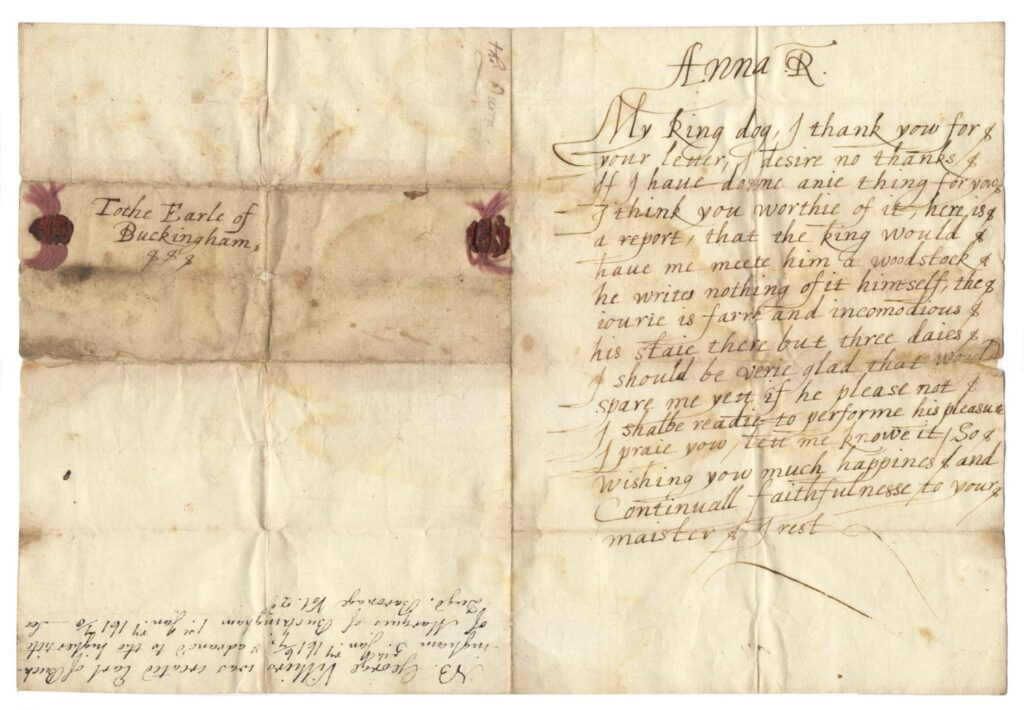
Tony: James had a distinct preference for men, which is well documented as he made no secret of it. Anna seems to have understood this was never going to change, but I found no evidence of her confronting James over his ‘favourites’. She resented Robert Carr and actively worked against his faction, but promoted George Villiers. She even asked James to make Villiers a Gentleman of the Bedchamber, and this gave her some control, nicknaming Villiers her ‘dog’.
PIC
Anna: Anna is a devout Lutheran but at the same time capable of compassion for Catholics. Was James as broadminded?
Tony: James was more tolerant than most Protestants until the Gunpowder Plot of 1605, after which he understandably saw Catholics as a threat – and enforced a strict Oath of Allegiance denying the Pope’s authority over monarchs.
Anna: James comes across as somewhat paranoid and deeply mistrustful of everyone but his chosen favourites. How much do you think this is a consequence of his upbringing, how much of his personality?
Tony: It’s difficult to be sure of nature or nurture, but his father, Lord Darnley, was murdered and his mother, Mary, Queen of Scots, executed, so his traumatic upbringing, would have been enough to give anyone trust issues. At the same time, his writing suggests a neurotic view of the world which could have developed as a ‘coping strategy’ – but not easy to prove! (Anna: Ha! Makes me think of that quote, “the wisest fool in Christendom”)
Thank you, Tony, for your replies – and now onto the book!
REVIEW
Over the last few years, I’ve read my way through Mr Riches books—from the first I picked up about Eleanor Cobham, supposed witch, to this, his most recent release, Queen Anna. It is his first book set in Stuart times, and Anna—or Anne as she is known in English history—is the first Stuart queen, a Danish princess married to James VI of Scotland and I of England. As a Scandinavian, I am rather pleased Mr Riches allows her to keep her real name throughout the book—and I loved the occasional Danish words and sentences.
James is older than Anna. She is a young teenager when they wed in 1589, he is over twenty, well-educated and somewhat paranoid. That’s what happens when you grow up surrounded by regents who have a tendency to die, whether it be murdered, fatally wounded defending James’ crown, or executed. He has also developed a fondness for male favourites, surrounding himself with young, male courtiers.
Mr Riches describes Anna’s first few years in Scotland as difficult. A new language, new customs, a husband she rarely sees and who clearly has no intention of involving her in matters of the state—the latter not entirely surprising, as Anna has seen her mother navigating a similar situation, having been excluded from the regency for her young son when Anna’s father died. However, Anna’s parents had a close relationship, and while Sofia of Mecklenburg had no official say in things, she probably exerted a strong unofficial influences—as queens should. Anna does not.
When Anna realises she is to be excluded from the raising of her children, the relationship with James takes a turn for the worse. At some point, the only thing uniting Anna and James is the final prize: the throne of England.
As always, Mr Riches delivers a well-researched book and presents a female protagonist restricted not only by her gender but also by her role. When her husband lavishes attention on one male favourite after the other, she can do nothing but bear it—or manipulate things so that the favourite he chooses is one in Anna’s debt. In England, they live more or less entirely separate lives. Not even when their eldest son, Henry Frederick, dies, are they united for more than a moment. He reverts to his life, she to hers. It is quite sad, all in all.
Mr Riches gives us a woman who is very much an island unto herself in the bustling court of James I. Yes, she is intensely involved in masques and other entertainments, but other than her loyal female companions, her intimate circle is very small. It includes her surviving daughter and son, but it never includes the man she wed. Not even when she lies on her deathbed does James come to her side. But he did write a pretty poem for her afterwards. Somehow, I think Anna would have preferred a hand to hold on to.
BUY LINK: https://mybook.to/QueenAnna

Tony Riches is a full-time UK author of historical fiction. He lives with his wife in Pembrokeshire, West Wales and is a specialist in the lives of the early Tudors. As well as his Elizabethan series, Tony’s historical fiction novels include the best-selling Tudor trilogy and his Brandon trilogy, (about Charles Brandon and his wives). For more information about Tony’s books please visit his website tonyriches.com and his blog, The Writing Desk and follow his podcast series, ‘Stories of the Tudors and Stuarts’
Social Media:
- Website – https://www.tonyriches.com/
- Twitter / X – @tonyriches
- Instagram – @tonyriches.author
- Threads – @tonyriches.author
- Blue Sky – @tonyriches.bsky.social
- Facebook – Tony Riches Author
- Goodreads – Tony Riches
- Amazon Author Page – Tony Riches
Thank you for a great review Anna
My pleasure!