


A week or so ago, I had the opportunity to visit Newgrange in Ireland. Actually, I visited the Brú na Boinne complex, an area in Ireland dotted with neolithic grave mounds, of which Newgrange is probably the most famous. Built around 5 000 years ago, to this day the burial passage in Newgrange is only fully illuminated on one day of the year—the winter solstice. On that day, light penetrates the permanent darkness for seventeen minutes and then goes out.
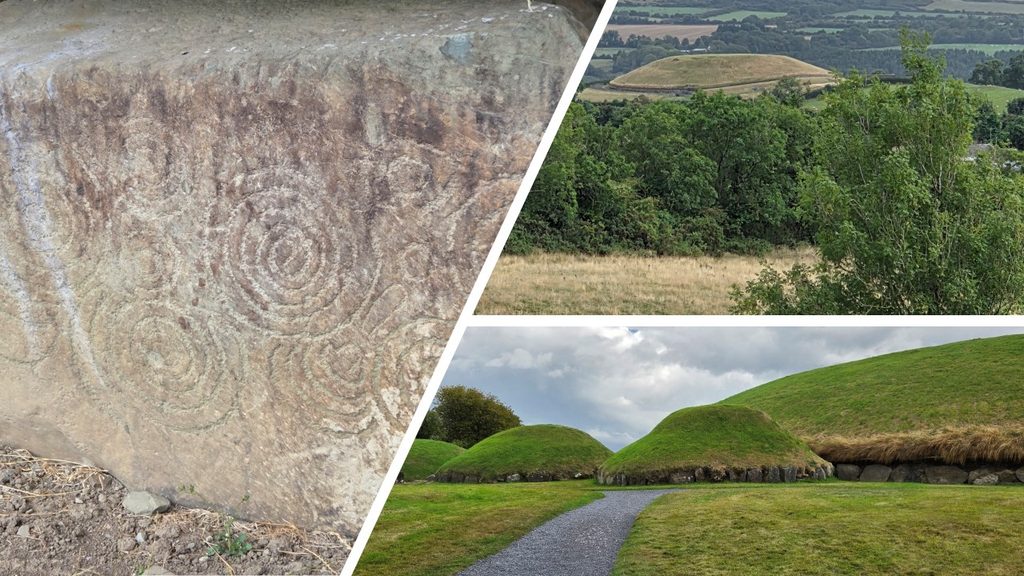
We visited Knowth first, a huge grassy dome with an impressive array of massive, carved kerbstones lining its circumference. Around it, stood various smaller mounds, but all of them basically of teh same design. Our guide told us that they have found over 150 various burial mounds within the huge complex. A staggering number, that.
I was very affected by the brief visit into Newgrange’s interior. A short, narrow passage ended in three small burial chambers. Above us was the massive stone roof that has shielded this place since it was first built, protecting the burned remnants of ancient humans from rain, sun and wind.
The people who built the Newgrange cremated their dead, and to judge from what has been found, the mounds were in use for several hundreds of years, not only as burial sites, but also as temples, with rituals probably conducted outside the actual passages. In front of each chamber, archaeologists had discovered the remains of three huge canines. Whether dogs or wolves was unknown, but they were probably buried there to protect the dead. Didn’t work all that well, as Newgrange and the other mounds have been pillaged. But still, from one little bone fragment DNA was extracted, indicating this particular person came from Anatolia or Syria—logical, when one considers just where the cradle of agriculture stood. Sites lile Brú na Boinne could only be built by civilisations that were stable and permanent, i.e. grew crops and kept livestock rather than wander the world.
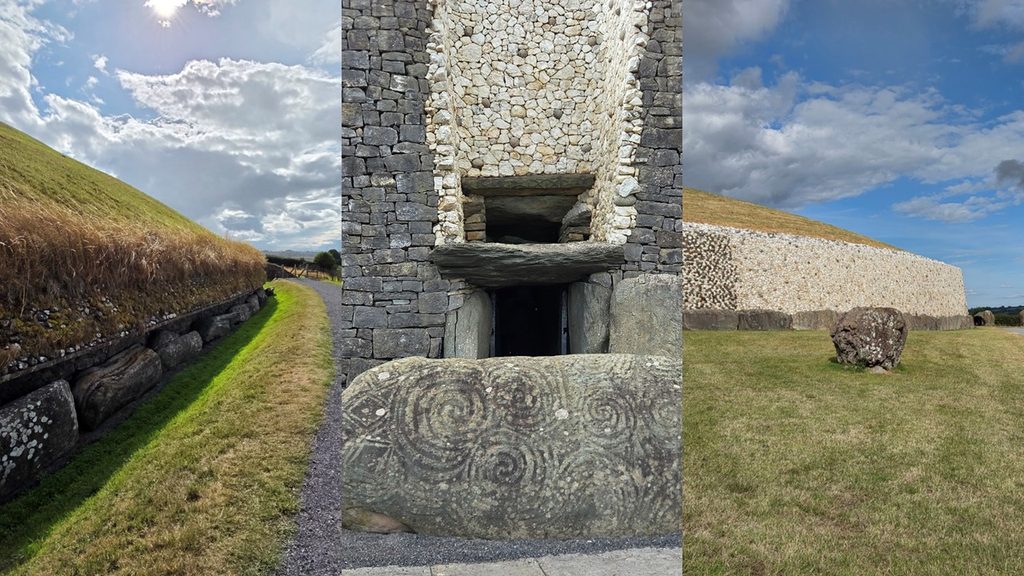
Leaving aside the silent, peaceful, grandeur of these huge mounds—and my awe at the fact that these very, very ancient people were so precise when building them—these grass-covered mounds filled me with a sense of serenity. All those years ago, our predecessors had a complex set of beliefs we do not know anything about except for the fact that they must have believed in some sort of afterlife.
It seems to go hand in hand with human history, this belief—or hope—that we get a make-over, a second chance if you will, after death. In some religions, it is all about rebirth, striving to be a better person until you finally reach a level of goodness high enough to be absorbed into everlasting peace. In others, the afterlife is a combo of carrot and stick: be good, go to heaven, don’t be good, go to hell. In general, it seems to me that no matter what beliefs people profess to, very, very few are capable of living with our focus on the life after this one—we are too preoccupied with maximising our benefits in the here and now.
People kill for their beliefs—well, they use their beliefs as a sad excuse for killing. We’ve done this throughout history, culminating in the “we’re bringing God to the natives” approach that has coloured most of the Christian expansionism. It should have been “ we are bringing OUR God to the natives”, because in most cases, the people forcibly converted to Christianity already had their own beliefs—it’s just that our Christian forebears believed their beliefs to be better.
One could hope that by 2026 humanity would have overcome the divisiveness of religion. After all, the things every human has in common—hope to see our children succeed, hope of a peaceful life, hope of feeling safe, to name a few—are far greater than the few things that divide us. Yet, sadly, that is not the case. Innocents die every day due to religion.
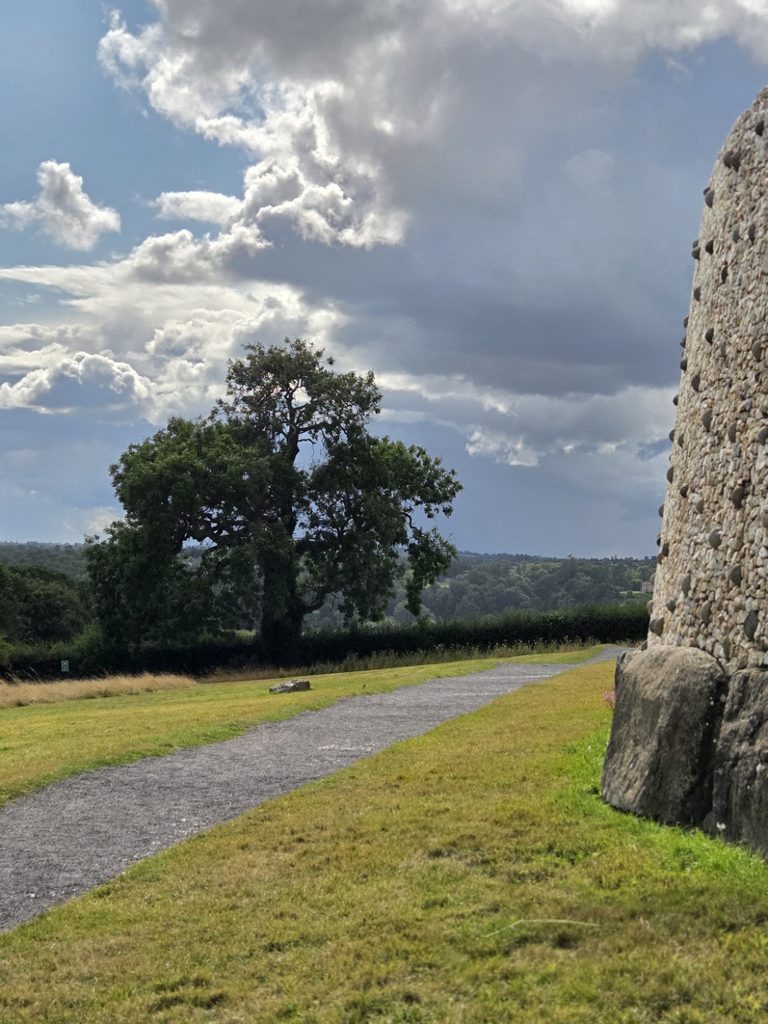
Faith for some is a source of strength and peace. For others, faith—or rather religion—is an oppressive weight of guilt and expectations. Over the years, I have developed my own principles of faith: it seems to me that God would want us to honour the great gift given to us—life—by living our best lives here, striving to be good and kind, offering our hands to those in need, no matter their creed or race. After all, that golden sentence, do unto others as you would have them do unto you does not come with a qualification: it does not say do unto others—assuming they are of your religion, your ethnicity, your gender—as you would have them do unto you.
Right, let’s leave all that deep stuff and instead move on to books.
I am presently deep in research for my next book, which leads to huge distractions along the lines of “how do Spanish magpies look” and “I need to know much, much more about Merino sheep” (?). I am also hugely annoyed by the fact that the Castilians of the past were singularly unimaginative when it came to names: Alfonso, Alfonso, Alfonso, Juan, Juan, Pedro . . . Gah!
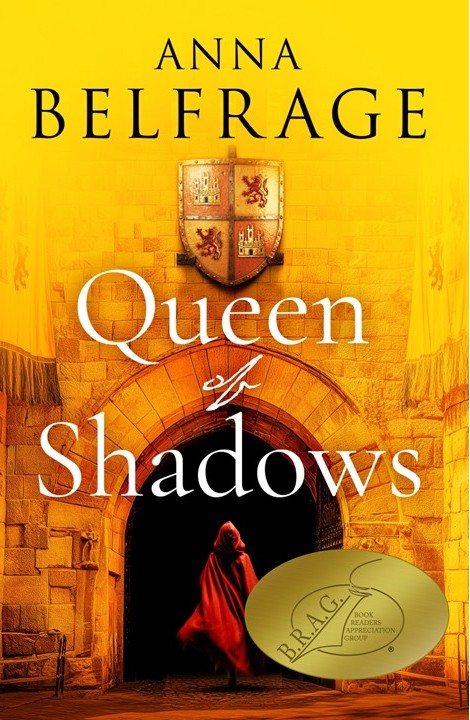
Anyway, while battling my naming issues, I am also delighted to announce that Queen of Shadows has just been awarded the Indie B.R.A.G. Medallion. I am utterly thrilled by this. A special thanks to the people at Brag medallion for their unstinting support of indie writers. You go, Geri and team!
Finally, some book recommendations:
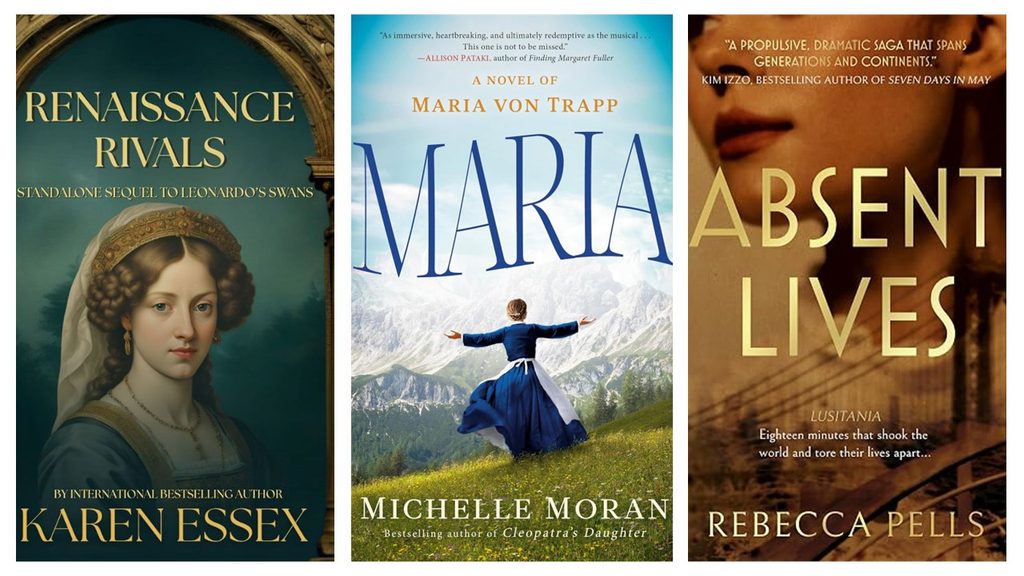
Some months ago, I reviewed Absent Lives for the Historical Novel Society. This is the story of Anita and Ellmore—a beautifully written narrative that is probably one of the most heart wrenching depictions of grief I have ever read. The author has very personal reasons for writing about these two people and the aftermaths of the Lusitania sinking off the coast of Ireland. Me, I emerged red-eyed but so, so impressed by the flowing prose.
I recently read a book called Maria: A Novel of Maria von Trapp. I was a tad doubtful at first—I belong to the generations that can sing every song in the musical, and happily hum “how do you solve a problem like Maria” when thinking of my own daughter. Obviously I knew Julie Andrew’s Maria was not the real Maria, but there was still some trepidation as I began to read. In conclusion, no, the real Maria von Trapp had very, very little in common with the sweetness of the heroine of the musical. Hers was not an easy life, and I commend the author for balancing so elegantly on the edge of telling the truth without ever lowering herself to defamation. Maria von Trapp comes to life, warts and all—but we all have warts!
Finally, I recently reviewed a book called Renaissance Rivals, featuring Lucrezia Borgia and Isabella d’Este. Think 16th century Italy, think conflict, hate, love! Read my review here!
With that, dear peeps, I leave you, wishing you all a golden September.
Anna