

When we bought our first house many, many years ago, it was a very small house in a very large garden.
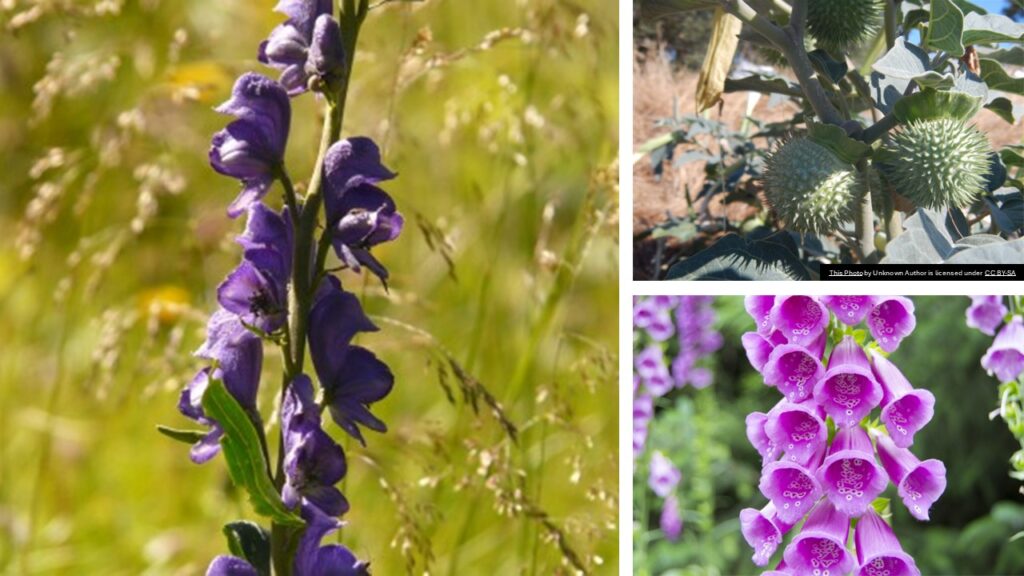
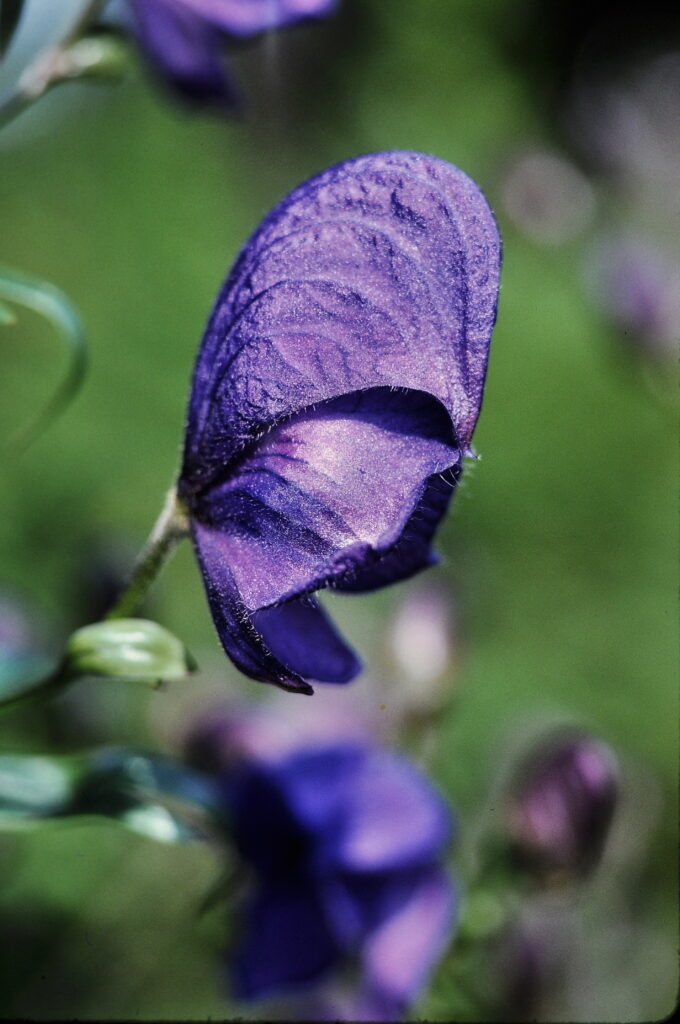
It was something of a magical garden, having been planted more than fifty years before to ensure whoever lived in the house was self-sufficient on potatoes, vegetables, berries of all sorts, apples, plums and pears. It also had a section that contained some of the most beautiful plants I’d ever seen: plants like monkshood, it’s dark blue flowers dipping in the wind; like jimson weed, with angelic white flowers and fruits that resembled miniature medieval maces; belladonna, it’s purple flowers converting into poisonous black berries; pink and white foxgloves adding a final touch.
“It has to go,” said hubby.
“I know,” I replied with a sigh.
The first baby Belfrage was about to be born, and plants as poisonous as these were too dangerous—especially as they are also so, so pretty. But then, many poisonous plants are. Pretty, that is. Enticing, even, like the laburnum’s dangling pods.
I cried the day we tore up this part of the garden. Turns out some of these plants were extremely tenacious, and for the coming two or three years, we had to keep a very narrow eye on this particular patch.
Anyway: the years passed, we moved house (bigger house, smaller garden—four kids required more indoor space) and then, in 2012 we bought our country house. First thing I see is the lovely laburnum tree, the gigantic stands of monkshood and the bursts of bright pink fox gloves. Well. Except that in 2012, our children were all old enough not to eat plants. So, for a while, I could enjoy the midnight blue of my monk’s hood, the golden flowers of the laburnum and the lovely, self-seeding foxgloves.
Then came the grandkids. So now, there is no laburnum, no monkshood, no foxgloves. At least not in our garden.
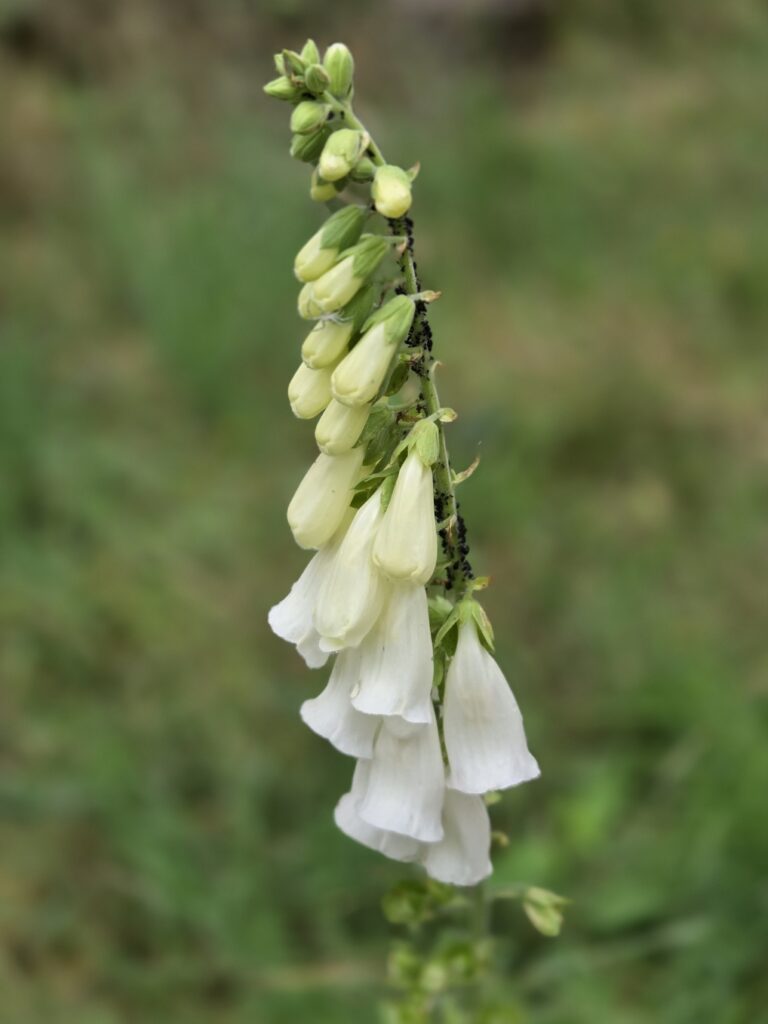
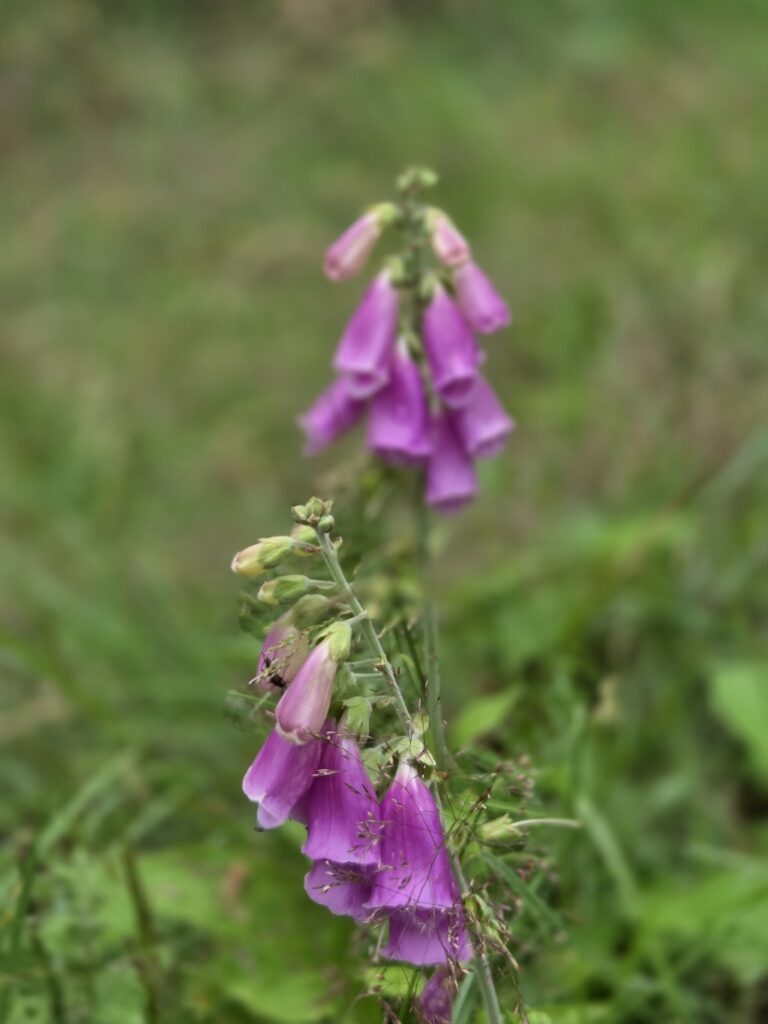
In the woods, however, there are foxgloves everywhere. In Swedish, we call them fingerborgsblomma, “thimble flower”. I think it’s sort of obvious why. I read somewhere that the English name, foxglove, is actually a contraction of the far older folk’s glove – i.e. the gloves of the little folk, the fairies. I rather like that, but further research sort of killed that theory, as there are far older documents referring to it as foxes’ gloves. Not quite sure how foxes would use the Digitalis purpurea as a glove—or why—but some think the name reflects the fact that quite often stands of foxgloves would grow near fox’s dens.
In traditional medicine, the foxglove was often used to treat dropsy – I suspect with varying success, depending on what kind of dropsy. However, one of the side effects of dropsy is that the heart is put under pressure—it is harder work to pump out blood in a body that’s retaining fluids, and in such cases the active ingredient in foxgloves can help.
My favourite 17th century herbalist, Nicholas Culpeper, recommended foxgloves to treat epilepsy and scrofula. He also recommended it as a purgative. It is doubtful whether foxgloves help with these ailments, but for a while digitalis was used to treat epilepsy—even if it now no longer is as it was not considered effective.
However, my dear foxglove has medicinal uses—namely for cardiac arrhythmias and, in some cases, congestive heart failures. These days, the plant that was used by herbalists for hundreds of years to treat all sorts of ills – seizures, dropsy, falling disease etc etc—is refined and used in very specific drugs for heart ailments. So how did we move from using the foxglove as a universal (but mostly inefficient) herbal cure for epilepsy and scrofula to its present use?
I think we must start by stating that it is probable that experienced healers in the distant past had already cottoned on to the positive effects of foxglove decoctions on patients with weak hearts and dropsy. It was, however, very dangerous to use such decoctions, as they could also kill the patient. No healer wanted to be accused of poisoning anyone, or of being a witch (another English name for foxglove is actually witches’ glove) so I imagine they were very, very careful when preparing anything with foxglove.
Overdosing on foxglove would lead to vomiting and diarrohea, to blurred vision, extreme weakness and cold sweats. Your heart could race, or it could slow to dangerously low levels. Muscular cramps could cause your heart to seize and, finally, fail. A rather terrible death.
In the late 18th century, a certain English doctor named William Withering fell in love with the fair Helena Cook. Helena Cook loved flowers. She made her living as a botanical illustrator but was a tad frail, which was how Doctor Withering first met her. To woo her, he brought her bouquets of different flowers, and to impress her, he read up on the various blooms he gave her. One such bloom was a foxglove, and for some reason this particular flower snagged his interest: he’d heard of a wise woman who’d used it successfully to treat a person with dropsy.

Off he went to investigate further, and soon enough he was deep in the world of Digitalis. Soon enough, he was conducting tests—he was very careful with the dosage—and after having tried out his decoctions on 158 patients, he could prove that 101 of them had been helped. The remaining 57 may simply have suffered from conditions that were not affected by the new drug—or so Withering hypothesised. Some of these patients died, but it was likely related to their underlying condition.
In 1785, Withering published his An Account of the Foxglove and Some of its edical Uses. What had once been a herbal remedy used with significant caution was about to become a relevant ingredient in the treatment of heart diseases.
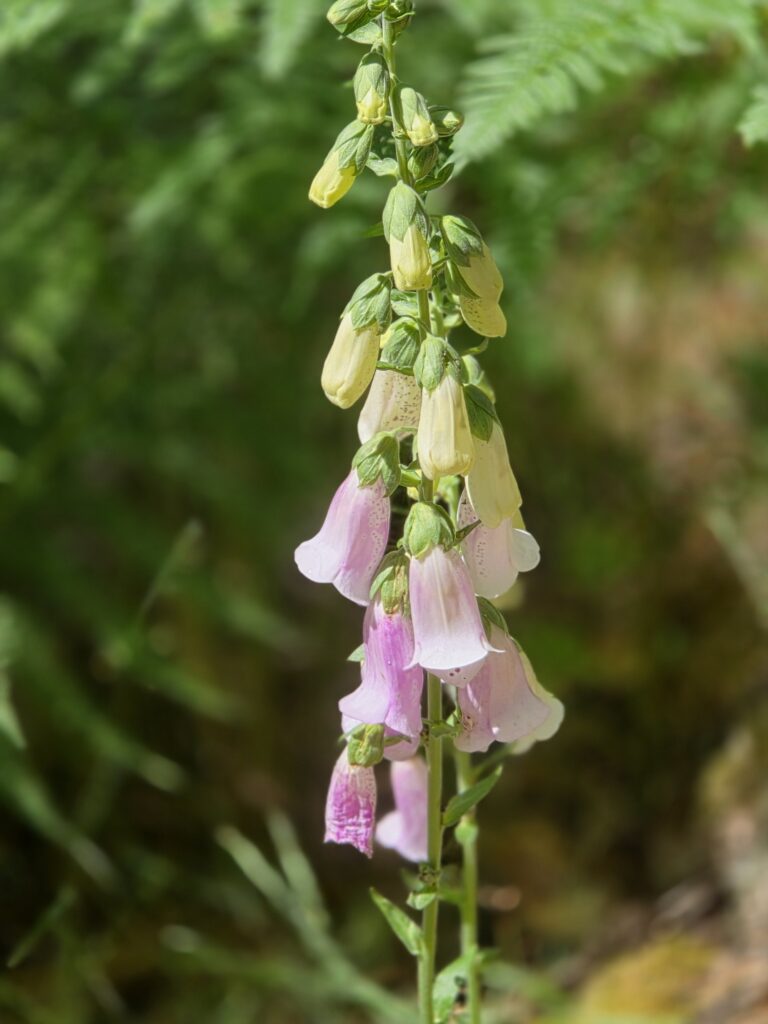
To this day, I do not know why the person who planted that first garden of ours decided to dedicate significant space to a collection of poisonous plants. Maybe she just found them as lovely as I do. But as long as there are small children running round my feet, I shall have to abstain from growing them, taking my guilty toxic pleasure by stopping at every foxglove I see on my long, long walks.